
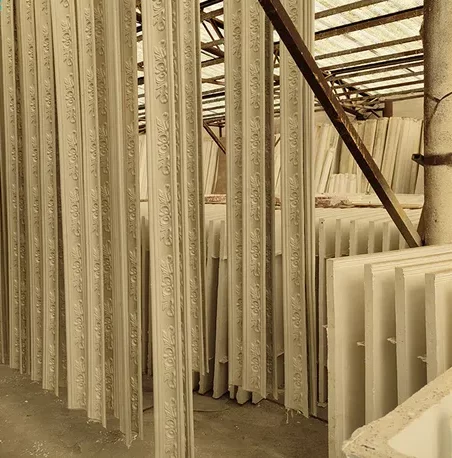
Why Proper Drying Matters in Plaster Moulding Manufacture
Many people assume that once a plaster moulding has been cast, it is ready for installation. In reality, one of the most important stages of manufacture takes place after the moulding leaves the mould.
Proper drying plaster mouldings is essential for achieving maximum strength, stability and long-term performance. Rushing this process can create problems that may not become visible until months or even years after installation.
For manufacturers committed to producing high-quality decorative plasterwork, drying is every bit as important as the casting process itself.
Why Proper Drying Plaster Mouldings Is Essential
Freshly cast plaster contains a significant amount of moisture.
Although the plaster may appear solid shortly after casting, water remains trapped within the material. This moisture must be allowed to leave gradually under controlled conditions before the moulding is considered fully dry.
Only when this process is complete can the plaster achieve its intended strength and dimensional stability.
What Happens During Drying?
As moisture evaporates from the plaster, the moulding gradually hardens and stabilises.
During this process:
- Excess moisture leaves the plaster
- Strength increases
- Weight reduces
- Dimensional stability improves
- Risk of future movement decreases
Allowing this process to occur naturally helps ensure the moulding performs correctly once installed.
The Risks of Rushed Drying
One of the biggest mistakes in plaster manufacture is attempting to remove moisture too quickly.
In an effort to speed production, some manufacturers may expose mouldings to excessive heat or aggressive drying conditions.
This can create problems including:
- Shrinkage
- Hairline cracking
- Distortion
- Reduced strength
- Internal stresses within the plaster
While these issues may not be immediately visible, they can contribute to future failures after installation.
Why Controlled Drying Produces Better Results
Professional manufacturers typically use carefully controlled drying environments.
This may involve:
- Dedicated drying rooms
- Gentle air circulation
- Consistent temperatures
- Controlled humidity levels
- Extended drying periods
The objective is not to remove moisture as quickly as possible, but to remove it evenly throughout the moulding.
This produces a more stable and reliable finished product.
How Drying Affects Cornice Performance
Cornice installations often remain in place for decades.
If mouldings have not been dried correctly before installation, problems can develop later, including:
- Joint cracking
- Surface crazing
- Movement at mitres
- Loss of adhesion
- Decorative detail deterioration
Properly dried mouldings are far less likely to experience these issues.
Traditional Craftsmanship and Modern Standards
Traditional plaster craftsmen have long understood the importance of drying times.
Historically, mouldings were often left to dry naturally for extended periods before being installed. While modern manufacturing methods have improved efficiency, the principles remain the same.
Quality plasterwork still requires patience.
Manufacturers who prioritise proper drying typically produce mouldings that offer superior performance and longevity compared to products rushed through production.
Why Quality Manufacturers Invest in Drying Facilities
Drying rooms represent a significant investment for plaster manufacturers.
They require:
- Dedicated space
- Energy costs
- Environmental controls
- Longer production schedules
However, these investments help ensure the finished mouldings meet the standards expected by installers, decorators and homeowners.
The result is a stronger, more stable product that performs reliably for many years.
Long-Term Benefits for Homeowners
Properly dried plaster mouldings provide several advantages:
- Improved durability
- Reduced cracking
- Better dimensional stability
- Stronger installation performance
- Longer service life
- Higher quality finish
Although homeowners rarely see the manufacturing process, the quality of drying can have a direct impact on how well decorative plasterwork performs throughout the life of the property.
Common Problems Caused by Poorly Dried Plaster Mouldings
When proper drying plaster mouldings is ignored, manufacturers can experience higher failure rates, increased waste and customer complaints. Proper drying plaster mouldings helps ensure consistency and long-term reliability.
Conclusion
Proper drying plaster mouldings is one of the most important stages of decorative plasterwork manufacture. While it can be tempting to accelerate production by forcing moisture out quickly, doing so can compromise strength, stability and long-term performance.
By allowing mouldings to dry gradually under controlled conditions, manufacturers can produce stronger, more reliable products that are less likely to crack, distort or fail after installation. For homeowners investing in decorative plasterwork, proper drying is a hidden but essential part of achieving a high-quality, long-lasting result.