Why Cornice Installation Quality Matters More Than You Think
Many homeowners focus heavily on selecting the right cornice profile but pay less attention to the quality of the installation itself. In reality, even the finest plaster mouldings can perform poorly if they are not fitted correctly.
Cornice installation quality has a direct impact on appearance, durability, structural stability and long-term performance. Poor workmanship can lead to visible joints, cracking, movement and costly repairs that may appear within months or years of installation.
By contrast, a professionally installed plaster cornice can remain in excellent condition for decades.
Why Installation Is Just As Important As The Cornice
A high-quality plaster cornice is only one part of a successful project.
The installer must ensure:
- Accurate setting out
- Proper fixing methods
- Secure mechanical support where required
- Correct adhesive application
- Precise joint alignment
- Careful finishing and detailing
Even small errors during installation can become highly visible once the room is decorated and painted.
The Importance of Proper Preparation
Successful installations begin long before the first length of cornice is lifted into position.
Walls and ceilings must be assessed for:
- Structural soundness
- Existing movement
- Uneven surfaces
- Damp problems
- Previous repair work
Preparation may involve stabilising loose plaster, correcting irregular surfaces or making local repairs before installation begins.
Skipping these steps can increase the risk of future cracking and joint failure.
Achieving Perfect Joints
One of the clearest signs of quality workmanship is the appearance of the joints.
Poor installations often suffer from:
- Visible joint lines
- Uneven profiles
- Poorly aligned patterns
- Shrinkage cracks
- Rough finishing
Experienced installers carefully align each section and blend joints so they become virtually invisible once decorated.
The goal is for the entire installation to appear as one continuous moulding rather than separate pieces joined together.
Correct Fixing Methods Matter
Traditional plaster cornice can be surprisingly heavy.
Depending on the profile and size, proper installation may require:
- Specialist plaster adhesives
- Mechanical fixings
- Timber grounds
- Reinforcement methods
- Additional support during curing
Relying solely on adhesive where additional support is required can eventually lead to movement or failure.
Professional installers understand how different substrates affect fixing requirements and select appropriate methods accordingly.
Preventing Future Cracking
Many homeowners assume cracks are unavoidable. While some minor building movement is normal, installation quality plays a major role in preventing premature cracking.
Common causes of installation-related cracking include:
- Insufficient fixing
- Poor joint preparation
- Inadequate support
- Rushed finishing
- Failure to account for existing movement
A properly installed cornice is far better equipped to withstand normal seasonal movement within the building.
The Impact on Decorative Finish
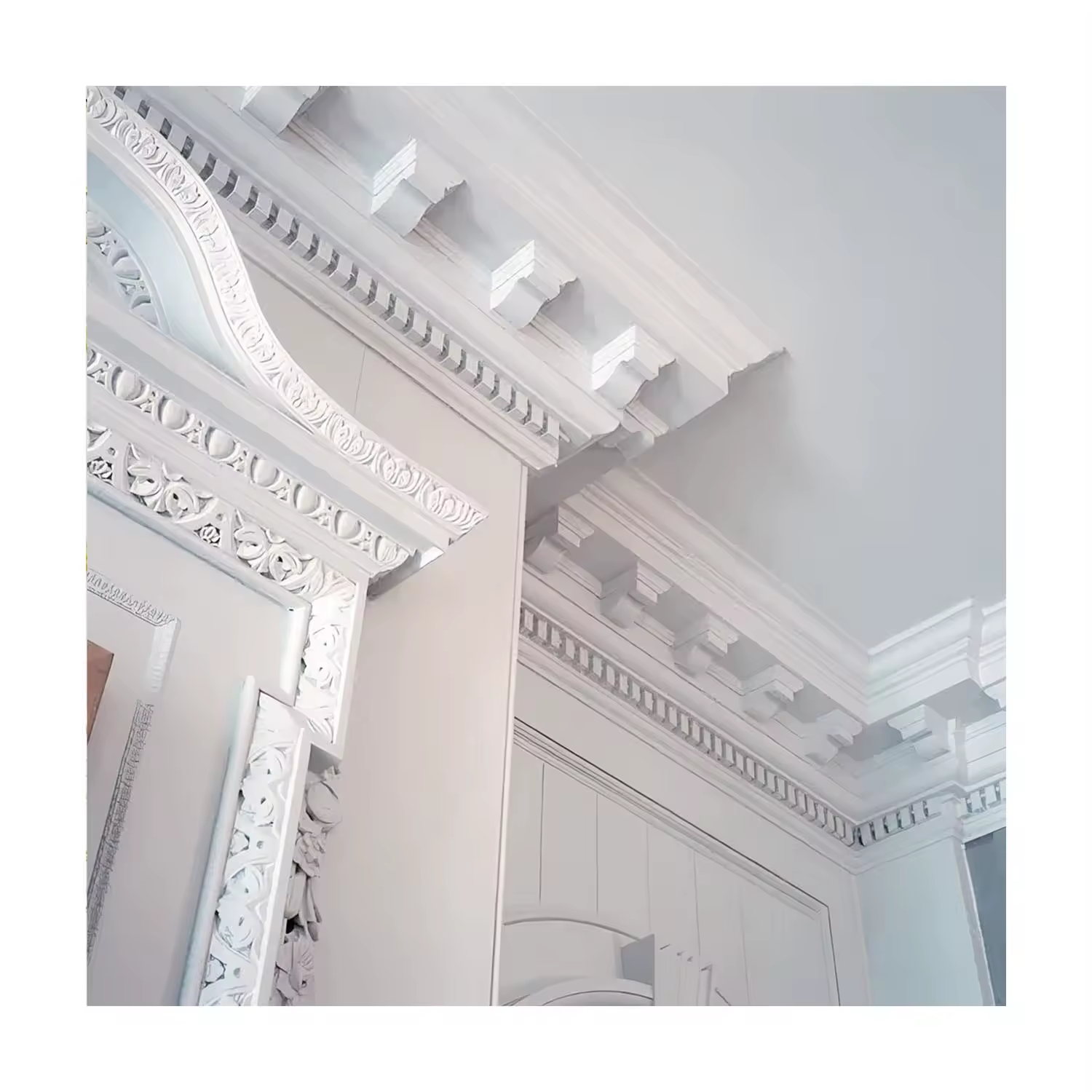
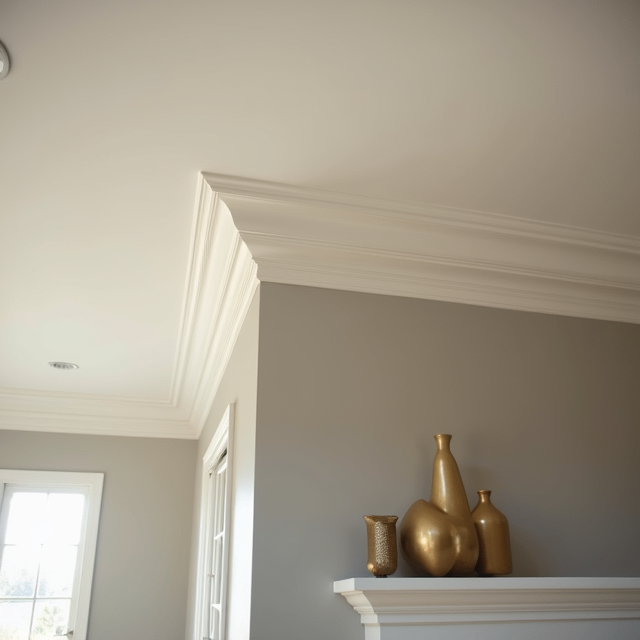
Cornice often occupies one of the most visible areas of a room where walls meet ceilings.
Any defects become highly noticeable after decoration.
Professional installation provides:
- Sharp detail reproduction
- Smooth transitions
- Clean lines
- Consistent profile alignment
- Better paint finishes
The difference between average workmanship and expert installation can significantly affect the overall appearance of the room.
Installation Quality and Long-Term Value
High-quality installation is an investment in the longevity of the property.
Correctly installed plaster mouldings often remain in excellent condition for many decades with only routine decoration required.
Poor installations may require:
- Ongoing repairs
- Joint filling
- Crack treatment
- Partial replacement
- Complete reinstallation
The initial savings from choosing a lower-quality installation service can quickly disappear if remedial work becomes necessary.
Why Experience Matters
Decorative plasterwork is a specialist trade that combines traditional techniques with modern installation methods.
Experienced installers understand:
- Room proportions
- Cornice profile behaviour
- Jointing techniques
- Traditional materials
- Heritage restoration methods
- Modern fixing systems
This expertise allows them to anticipate potential problems and achieve a higher standard of finish.
Conclusion
Many homeowners focus entirely on selecting a beautiful cornice profile, but the quality of the installation is equally important.
Professional installation helps ensure accurate alignment, strong fixing, seamless joints and long-term durability. It also reduces the likelihood of cracking, movement and costly repairs in the future.
Whether installing cornice in a modern home or restoring period plasterwork, choosing experienced specialists can make the difference between an installation that lasts a few years and one that enhances the property for generations.
Good cornice installation quality not only improves appearance but also helps prevent future cracking, movement and costly repairs.
Suggested Related Articles: